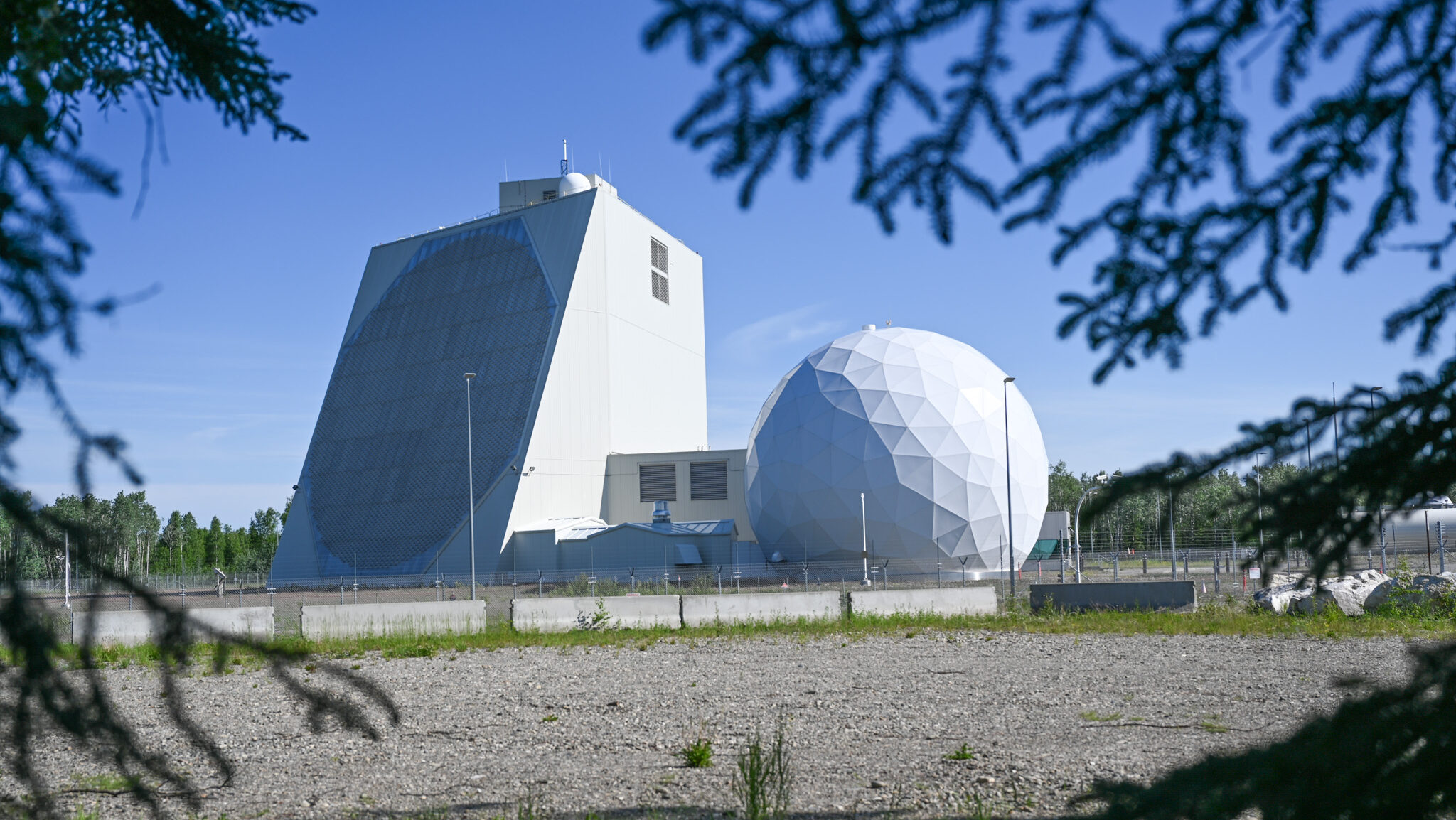
Passive ground-based sensor networks could bolster air, missile defense resilience: CSIS
Passive sensors do not need to emit energy to find and fix targets, thus, they are harder for adversaries to find, track and target.
Passive sensors do not need to emit energy to find and fix targets, thus, they are harder for adversaries to find, track and target.
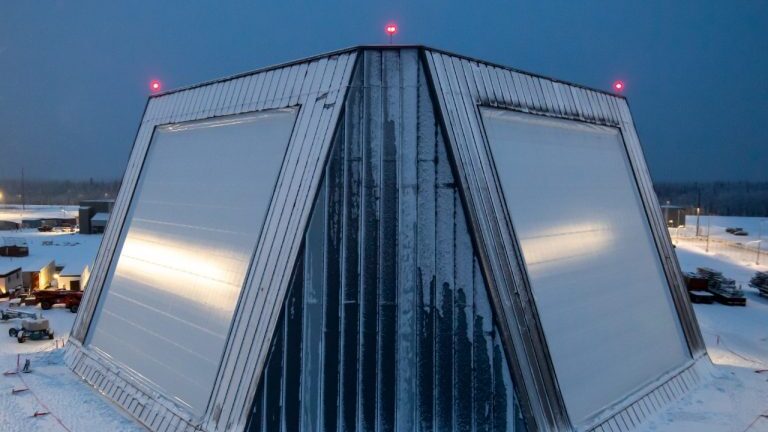
Selling off the low S-band "is a terrible, horrible, no good, very bad idea," Tom Karako, director of the CSIS Missile Defense Project, told Breaking Defense today.


The initial command and control gateway to earn a continuous Authority to Operate is changing multi-domain operations.


Today's battlefield is fraught with complex threats like drones and missiles. IAI ELTA's Scorpius technology offers unmatched detection and jamming, ensuring electromagnetic superiority.

The radars would help modernize NORAD’s air defenses, though it’s unclear how the program may change due to strained ties between the US and Canada introduced by the Trump administration.

The upgrade allows existing radar warning receivers to analyze unfamiliar signals in real time — fast enough to warn the pilot if it’s an enemy radar locking on. “It could go on any kind of F-16” or a wide range of other aircraft, Raytheon Vice President Michael Baladjanian told Breaking Defense.

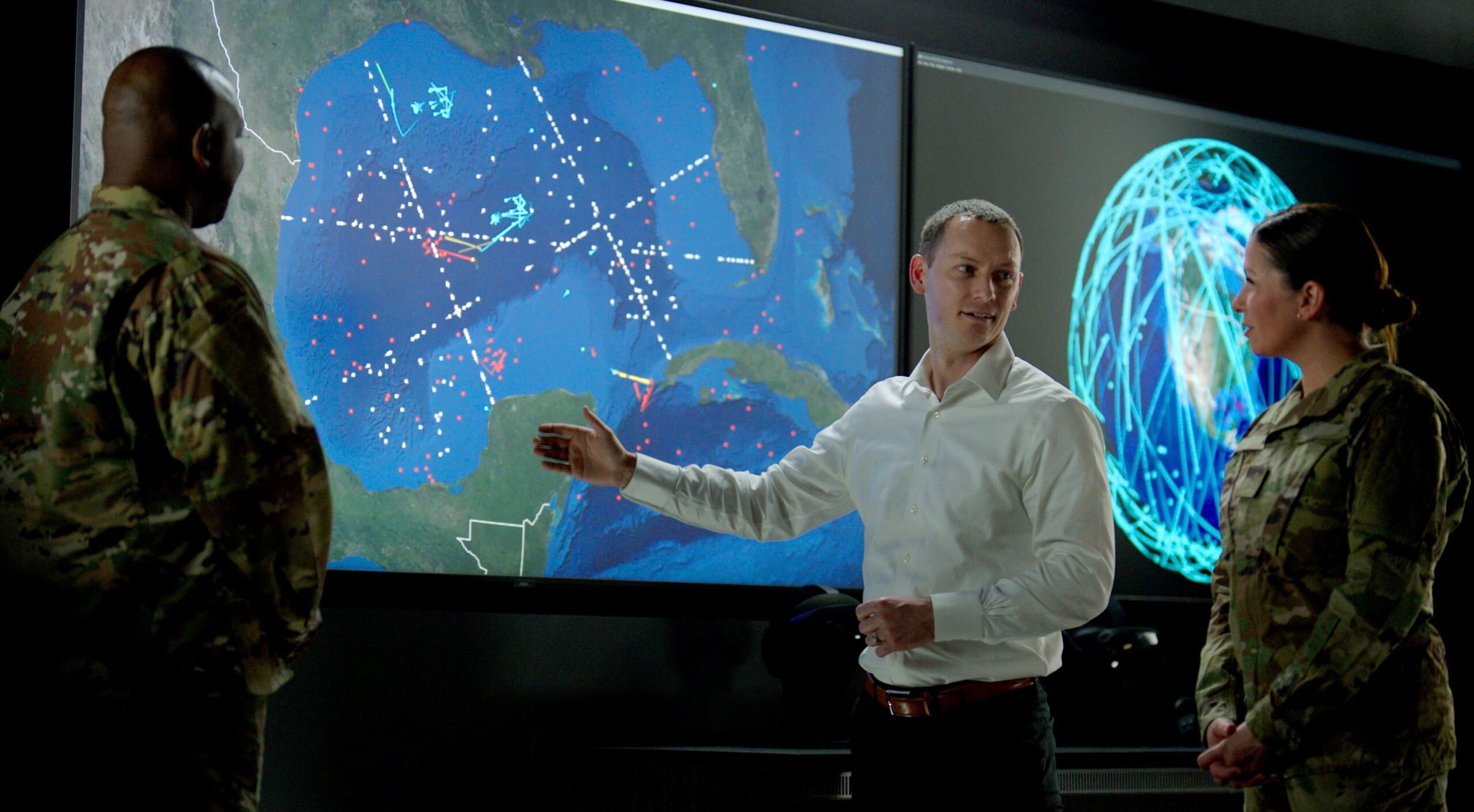
A tool to explore what-if scenarios and tradeoffs at the theater-level faster than traditional analysis.


Blending superior optics, advanced stabilization and AI-powered autonomy in a compact and rugged system, ASELFLIR 600 delivers unmatched intelligence, surveillance and reconnaissance (ISR) capabilities.

Drones, high-speed cruise missiles, and ballistic missiles attacking together from 360° creates complexity only certain radars can handle.

Next-generation modular radars and new composable weapon capabilities solve a critical problem for the U.S. and allied militaries.

Advanced technologies for tactical and strategic dominance.


Protecting against loitering munitions and a range of aerial threats. Leonardo DRS is supporting the U.S. Army with a radar-based “Top Attack” force protection capability.


Cybersecurity skills must evolve in near-real time as Zero Day threats continue and AI provides new challenges.

There's a new fire-control radar that's air-cooled and small enough for light-attack aircraft, helicopters, and unmanned aircraft systems.

The language in the SASC version of FY25 NDAA demands that DoD detail what military systems have previously and currently have operated in, or in those adjacent to, "the 1525-1559 megahertz and the 1626.5-1660.5 megahertz" radio frequency bands at the center of the long-running DoD-Ligado dispute.

Dan Ceperley, the company's chief operating officer, told Breaking Defense that VLEO — typically defined as between 150 and 350 kilometers in altitude — is increasingly being used, including by Russia and China.

Hiding in the sun, launching mini satellites and radar absorbent materials are just some of the tricks nations are using to hide their military satellites in orbit.